Why Most Hiking Knee Pain Happens on the Way Down, Not the Way Up
Hikers who train hard for the climb and still end up with sore, aching knees are often missing the actual source of that pain, since descending a trail requires the legs to repeatedly brake body weight against gravity in a way climbing simply doesn’t demand at all.

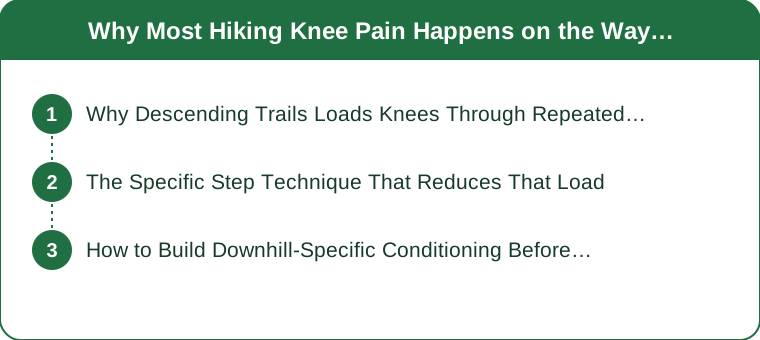
Why Descending Trails Loads Knees Through Repeated Braking Steps That Climbing Simply Doesn’t Require
The braking-load mechanism: the every-downhill-step-requires-the-quadriceps-to-eccentrically-contract-and-absorb-body-weight (the the leg muscles lengthening under load with each step to control the descent rather than propel forward — the quadriceps-eccentrically-absorb-each-downhill-step), the the-that-braking-action-transmits-significant-force-through-the-knee-joint-with-every-single-step (the a much higher per-step joint load on the way down compared to the propulsive, joint-friendly motion of climbing — the braking-transmits-high-force-through-knee), the the-a-long-descent-accumulates-thousands-of-these-braking-steps-in-a-single-hike (the the cumulative volume of high-load steps being what actually produces the soreness, not any single step alone — the accumulated-braking-steps-produce-soreness), and the reframe (downhill hiking loading the knee joint in a fundamentally different and often more demanding way than climbing, regardless of how well-conditioned someone is for the uphill portion)).

The Specific Step Technique That Reduces That Load
The actual technique: the take-shorter-more-frequent-steps-on-descents-rather-than-long-strides (the shorter steps distributing the braking force across more total steps rather than concentrating it in fewer, larger ones — the shorter-steps-distribute-braking-force), the the-land-with-a-slightly-bent-knee-rather-than-a-straight-locked-leg (the a bent landing absorbing force through muscle rather than transmitting it directly into the joint — the bent-knee-landing-absorbs-force), the the-use-trekking-poles-to-offload-some-of-the-braking-demand-from-the-knees-onto-the-arms (the redistributing part of the total braking load to a different part of the body entirely — the poles-offload-load-to-arms), and the frame (shorter steps, a bent knee on landing, and trekking poles to redistribute load — three concrete techniques that directly reduce the per-step knee force on a descent).
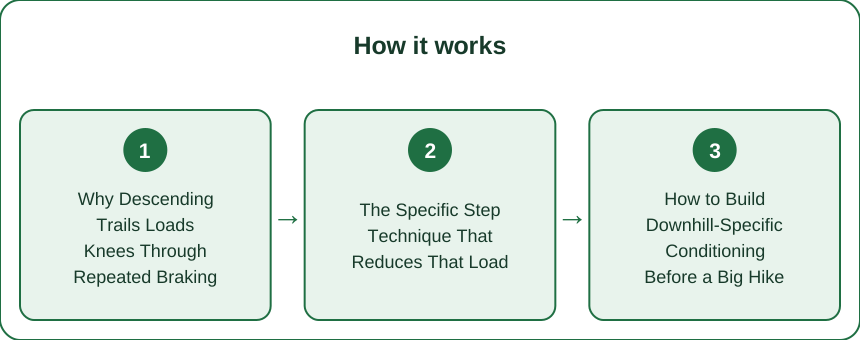
How to Build Downhill-Specific Conditioning Before a Big Hike Instead of Only Training the Climb
The conditioning approach: the include-downhill-specific-training-like-decline-walking-or-stair-descents-not-just-uphill-cardio (the deliberately training the eccentric braking motion that descents require, not only the propulsive motion climbing uses — the train-decline-walking-not-just-uphill-cardio), the the-strengthen-quadriceps-through-eccentric-focused-exercises-like-slow-controlled-lunges (the targeting the specific muscle action that absorbs downhill load with dedicated strength work — the strengthen-quads-with-eccentric-focused-exercises), the the-practice-actual-downhill-sections-on-training-hikes-rather-than-only-logging-uphill-mileage (the specific practice on real descending terrain being different from generic cardio conditioning — the practice-real-downhill-terrain-on-training-hikes), and the frame (training decline walking specifically, strengthening quads with eccentric-focused work, and practicing real downhill terrain on training hikes — conditioning that prepares the knees for the demand descents actually place on them, not just the climb).
Hikers who train hard for the climb often still end up with sore, aching knees because descending requires the quadriceps to repeatedly contract eccentrically and brake body weight against gravity with every step, transmitting significant force through the knee joint in a way climbing simply doesn’t, and a long descent accumulates thousands of those braking steps in a single hike. Reduce that load with shorter, more frequent steps rather than long strides, landing with a slightly bent knee instead of a straight locked leg, and using trekking poles to offload some of the braking demand from the knees onto the arms. Build downhill-specific conditioning before a big hike by including decline walking or stair descents rather than only uphill cardio, strengthening quads with eccentric-focused exercises like slow controlled lunges, and practicing actual downhill terrain on training hikes rather than only logging uphill mileage.
Keep Reading
This article is for general informational and styling purposes only. Fit, sizing, and product availability may vary — check current details before purchasing.